
Not every damaged tooth needs the same repair. A small chip on a front tooth and a molar cracked under years of chewing can both be fixed, but the right fix is rarely identical. Dental bonding and dental crowns are the two options most patients end up comparing, and the decision usually comes down to how much of the tooth is involved, how long you want the repair to hold up, and what you are willing to invest in time and money.
This guide breaks down how each option works, where the strengths of each one sit, and the situations where one clearly makes more sense than the other.
How Dental Bonding Works
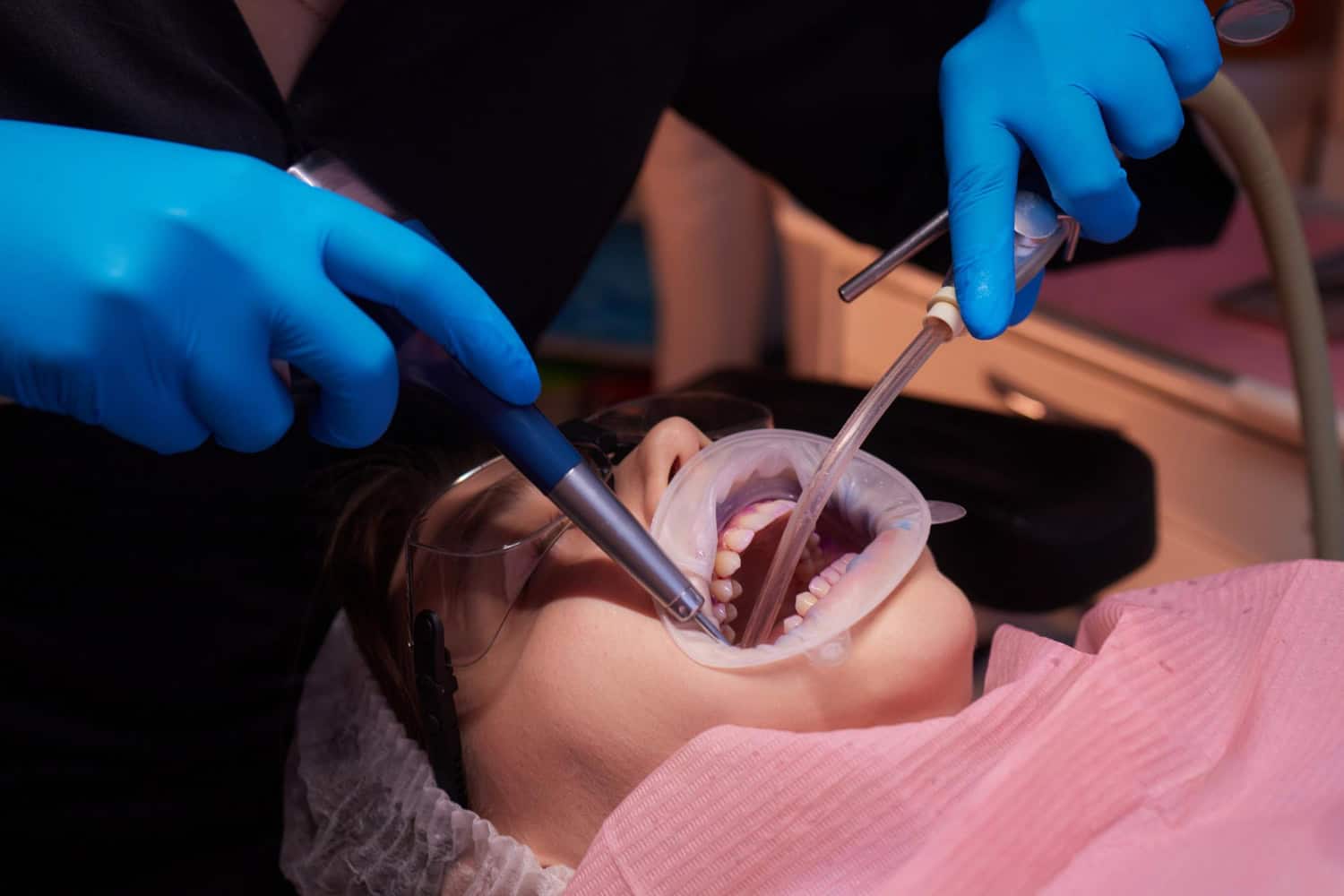
Dental bonding uses a tooth-colored composite resin that is shaped and hardened directly onto the tooth. The material comes in two primary forms: direct composite bonding, which repairs chips, cracks, or fills cavities, and adhesive bonding, which is used with restorations like crowns to help them attach and stay in place.
Direct composite bonding is the version most people mean when they compare bonding to crowns. It is the most conservative way to change or repair a tooth because it only covers part of the tooth rather than surrounding the whole thing. Because the resin is applied and sculpted in the mouth, the work is typically completed in a single visit.
Cost is another reason bonding comes up in conversation so often. Bonding generally costs less than porcelain veneers or dental crowns, both of which involve more extensive preparation and a laboratory-made restoration. For patients who want a quick improvement without a large commitment, that combination of speed, lower upfront cost, and minimal tooth removal is appealing.
How Dental Crowns Work
A crown is a custom restoration that caps a tooth. Unlike bonding or veneers, which only cover part of the tooth, a dental crown encases the entire visible portion of a tooth above the gumline. That full coverage is what allows a crown to restore structural integrity when a tooth has been weakened, badly cracked, or worn down.
Because a crown has to fit precisely over the whole tooth, it represents a larger investment in both time and money than bonding. More of the tooth has to be prepared to make room for the restoration, which is why crowns are considered the most radical of the common cosmetic and restorative choices, with porcelain veneers sitting somewhere in the middle.
The trade-off for that bigger commitment is longevity. Crowns are significantly more durable and longer lasting than composite bonding, and they tend to hold up well over the years. Crowns last 10 to 15 years on average, though how any individual restoration performs depends on the tooth, your bite, and your home care.
Dental Bonding vs Crowns at a Glance
| Factor | Dental Bonding | Dental Crown |
|---|---|---|
| Coverage | Covers part of the tooth | Encases the entire visible portion above the gumline |
| Tooth structure | Most conservative option | Least conservative; more preparation required |
| Time involved | Typically completed in a single visit | Larger investment of time |
| Upfront cost | Generally lower | Higher |
| Durability | Shorter expected lifespan | Significantly more durable |
| Typical lifespan | Varies; ask your dentist for an estimate | 10 to 15 years on average |
| Common uses | Chips, cracks, small cavities, cosmetic changes | Structural repair of weakened or badly damaged teeth |
One row in that table is worth a closer look. Published guidance on bonding lifespans is far less consistent than it is for crowns. Rather than guessing, ask your dentist what a realistic expectation looks like for your specific tooth, since position in the mouth and biting force both play a role.
When Bonding Makes Sense
Bonding is often the better first move when the problem is small and cosmetic. Typical situations include:
- A minor chip or small crack in a tooth
- A small cavity that needs filling
- Reshaping a tooth or masking a small imperfection for appearance
- Front teeth, where a conservative repair protects more natural enamel
- Patients who want a faster result with a lower upfront cost
The size of the fracture matters most here. When a broken tooth has only a small break, bonding can often repair it well. Bonding is frequently described as the quick fix option, and that framing is fair as long as the damage is limited to the surface or a small area of the tooth.
When a Crown Makes Sense
Crowns are built for structural repair, and they earn their cost when a tooth can no longer carry normal biting forces on its own. Circumstances that point toward a crown include:
- A fracture large enough that a bonded repair would not hold
- A tooth that needs its full strength and shape rebuilt
- Damage that extends across a wide portion of the tooth
- Situations where durability and a longer service life matter more than a lower upfront cost
On a broken tooth, the deciding question is usually the same one a dentist asks first: how big is the fracture? A small break is a bonding conversation. A large break that leaves the tooth weakened is generally a crown conversation.
Cost and Time Compared
Bonding costs less upfront and is completed in a single visit. A crown is a larger investment in time and money, but it tends to hold up longer. That difference matters when you think about cost across years rather than only at the moment of treatment.
A cheaper repair that needs frequent replacement is not always the better value, and an expensive restoration may be more than a small chip actually requires. Ask for a clear picture of both paths before deciding, including what happens if the first repair does not last as long as expected.
Can You Switch From Bonding to a Crown Later?
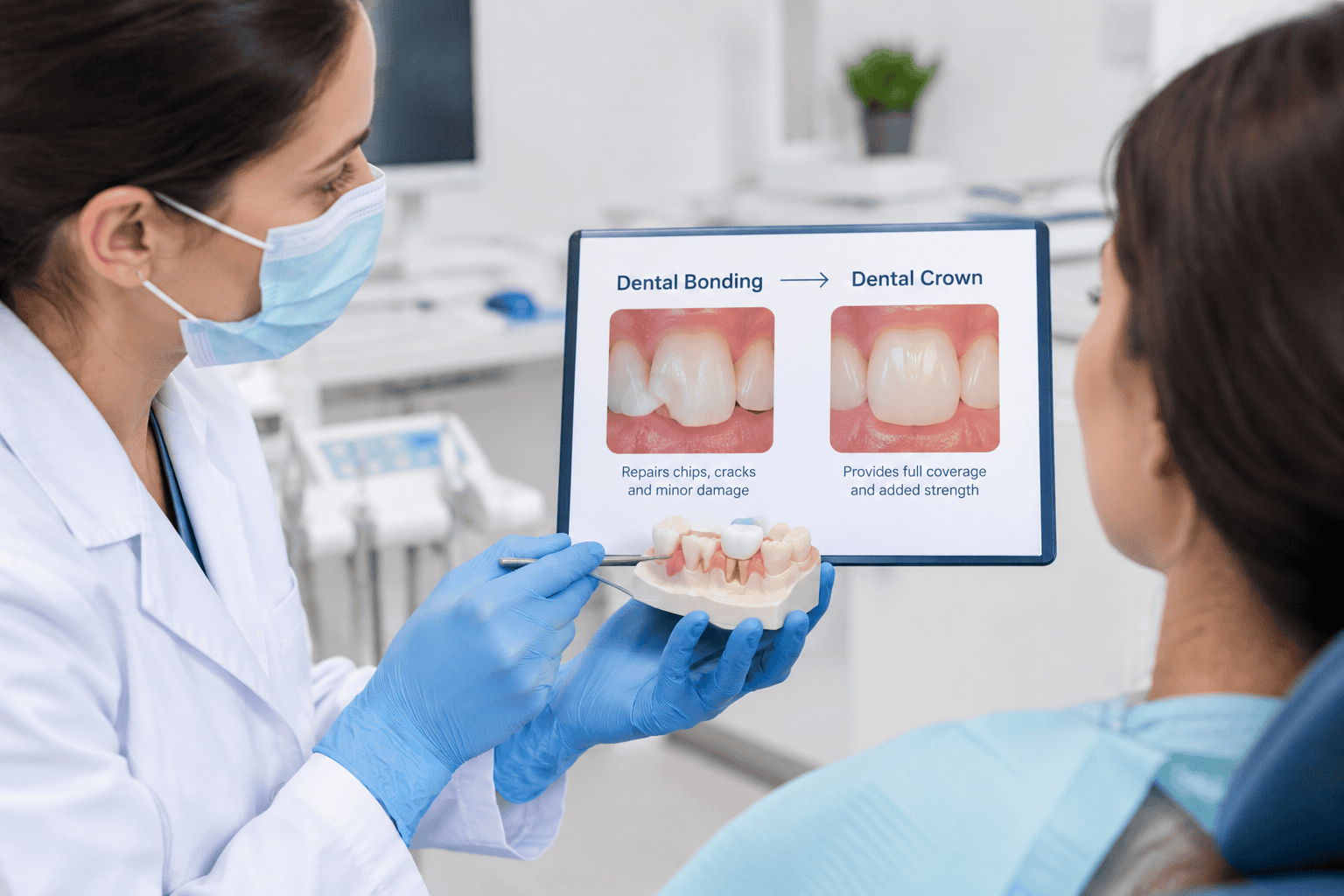
Yes, absolutely. Bonding does not close the door on other treatments. Many patients treat bonding as a first step, then move to a crown later if the tooth shows more wear, the resin needs repeated repair, or the damage turns out to be larger than it first appeared. Because bonding is the more conservative option, choosing it early generally does not take anything off the table.
What to Ask at Your Consultation
Bring a short list of questions to your appointment so the recommendation makes sense in your own terms:
- How much of my tooth is actually damaged?
- Is the damage small enough for bonding to hold?
- How long should I expect this repair to last in my situation?
- What is the upfront cost of each option?
- If I start with bonding, what would moving to a crown later involve?
At Cornerstone Dental Group in Westford, patients from Lowell, Chelmsford, Nashua, Tyngsborough, Acton, and Ayer ask versions of these questions every week. Digital scanning with iTero helps show what is happening with a tooth before treatment begins, so the choice between bonding and a crown is based on what is actually there rather than an estimate.
Frequently Asked Questions
Is dental bonding as strong as a crown?
No. Crowns are significantly more durable and long lasting than composite bonding. Bonding works well for small chips, cracks, and cavities, but it does not rebuild the full strength of a tooth the way a crown does. If a tooth has to withstand heavy biting force, a crown is usually the sturdier option over the long run.
How long does a dental crown last?
Crowns last about 10 to 15 years on average. How long yours lasts depends on the tooth, your bite, and how well you care for it. Bonding does not hold up as long as a crown, but bonding lifespans vary, so the better approach is to ask your dentist for an estimate specific to your tooth.
Can a chipped tooth be fixed with bonding instead of a crown?
Often, yes. The deciding factor is the size of the fracture. A small break can typically be repaired with bonding, while a large break that weakens the tooth usually calls for a crown. Have the tooth evaluated before deciding, since a repair that is too small for the damage will not hold up.
Does a crown cover more of the tooth than bonding?
Yes. A crown encases the entire visible portion of a tooth above the gumline, while bonding only covers part of the tooth. That full coverage is what makes crowns useful for structural repair, and it is also why crowns are considered less conservative than bonding, since more of the tooth has to be prepared.
Can I replace bonding with a crown later?
Yes, absolutely. If bonding wears down, chips again, or the tooth turns out to need more support, a crown can be placed afterward. Starting with the more conservative option does not prevent a crown later, which is one reason bonding is so often used as a first step for smaller repairs.