
A tooth infection rarely announces itself in a single dramatic moment. Dental references describe it as something that often develops quietly, starting as a dull ache that comes and goes, a twinge when you bite down on one tooth, or a flash of sensitivity when hot coffee hits a particular spot. Because those early signals overlap with ordinary tooth sensitivity, plenty of people wait longer than they should before picking up the phone.
Knowing which symptoms tend to appear first, which ones follow later, and which ones mean you should be seen the same day makes the decision much easier.
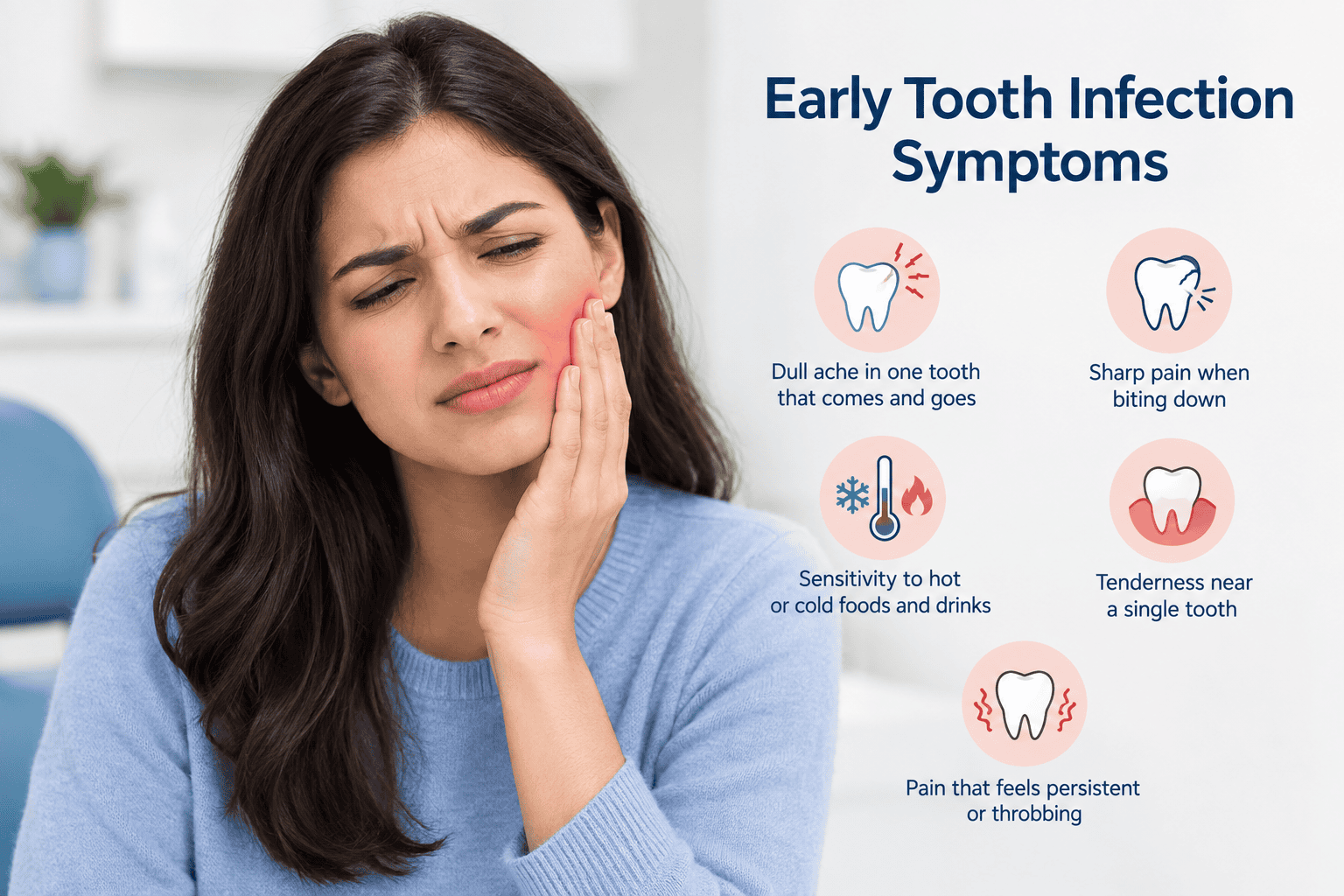
Early Signs of a Tooth Infection
Pain is usually the first sign that something is wrong. According to dental sources, that pain may show up as a dull ache that fades and returns, or as a sharp jolt when you bite down on the affected tooth. The telling detail is that it keeps coming back to the same tooth rather than drifting around your mouth.
Early warning signs that dentists look for include:
- A dull ache in one tooth that comes and goes
- A sharp pain when biting down
- Sensitivity to hot or cold foods and drinks
- Tenderness in a small area near a single tooth
- Pain that feels persistent or throbbing rather than occasional
Pain Patterns That Point to an Infection
Not every toothache means an infection, but the character of the pain is one of the clearest clues. Sources describe infected teeth as more likely to produce persistent or throbbing pain, as opposed to the passing twinge caused by a stray piece of food. Pain when chewing your food and pain when biting down are both commonly reported.
Where the pain travels also matters. A severe, constant, throbbing toothache can spread beyond the tooth itself to the jawbone, the neck, or even the ear. When pain reaches that far, it suggests the problem is no longer confined to the surface of a single tooth. Pain or discomfort with hot foods and drinks falls into the same category of signals, especially when it lingers after the food or drink is gone.
Visible Signs: Swelling, Gum Bumps, and Redness
Some of the most reliable signs are ones you can see rather than feel. Swollen gums are common, and so is a small swollen bump on the gum that looks similar to a pimple. Redness inside the mouth, or outside the mouth on the face or jaw, is another reported symptom.
- Swollen or puffy gums around one tooth
- A pimple-like bump on the gum tissue
- Redness inside the mouth, or on the face or jaw
- Tenderness when the area is touched
- Swelling that changes the shape of your cheek or jaw
Bad breath and a bad taste in the mouth also appear on lists of infection signs, usually alongside persistent pain in the same area. On their own, either one can have a harmless explanation. Paired with a tooth that hurts, they point much more clearly toward an infection.
Signs That Appear as an Infection Progresses
Dental references describe a fairly consistent order to symptoms. A persistent toothache, sensitivity to hot or cold, and tenderness near one tooth usually come first. Swelling, fever, and a bad taste tend to follow if the problem is not addressed. Tender lumps under the jaw or along the sides of the neck that hurt when touched typically appear alongside fever.
More advanced symptoms include difficulty opening the mouth and difficulty swallowing. These are not minor complaints. They suggest the infection is affecting tissue beyond the tooth itself and need prompt professional attention rather than a wait-and-see approach.
Tooth Infection Symptoms at a Glance
| Symptom | What dental references describe |
|---|---|
| Throbbing toothache | Severe, constant pain that can spread to the jawbone, neck, or ear |
| Hot and cold sensitivity | Pain or discomfort triggered by hot or cold foods and drinks |
| Pain on biting | Sharp pain when biting down, plus pain while chewing food |
| Swollen gums | Swelling around one tooth, sometimes with a pimple-like bump on the gum |
| Bad breath or bad taste | Often reported along with persistent tooth pain |
| Fever with neck tenderness | Tender lumps under the jaw or along the sides of the neck |
| Jaw stiffness | Difficulty opening the mouth and difficulty swallowing |
| Redness or facial swelling | Redness inside the mouth, or outside on the face or jaw |
When to Contact a Dentist Right Away
Some symptoms justify a same-day call rather than an appointment several weeks out. Dental sources group the following as reasons to seek care quickly:
- Severe, constant, throbbing toothache that does not let up
- Pain that has spread to your jawbone, neck, or ear
- Swelling in your face, jaw, or gums
- Fever, or tender lumps under the jaw or in the neck
- Difficulty opening your mouth or swallowing
- A pimple-like bump on the gum together with a bad taste in your mouth
Difficulty swallowing deserves particular attention. If you are having trouble swallowing, contact a dental office immediately and be prepared to seek urgent medical care. That is not a symptom to monitor at home and hope it settles overnight.
Getting Care in Westford and Nearby Communities
Cornerstone Dental Group is a private boutique practice in Westford, Massachusetts, offering family, cosmetic, restorative, and emergency dentistry. Patients travel in from Westford as well as Lowell, Chelmsford, Nashua, Tyngsborough, Acton, and Ayer. The practice uses advanced technology including AI diagnostics and iTero scanning to evaluate teeth and plan treatment, which helps when the source of pain is not obvious from the surface.
The team also emphasizes listening and comfort, which matters if dental visits make you anxious. Describing your symptoms honestly, including how long they have been going on, gives the dentist a much better starting point.
Why Waiting Usually Makes Things Harder
Dental professionals note that tooth infections often develop silently and give little warning before escalating. Learning to recognize the early signs and scheduling an appointment right away can be the difference between a straightforward treatment and a serious, potentially life-threatening situation. That framing appears throughout clinical writing on dental abscesses, and it explains why dental offices treat persistent tooth pain as something to look at promptly rather than something to wait out.
There is also a practical side to acting early. The sooner a problem is identified, the more options there usually are, and the less time you spend managing pain that keeps interrupting your sleep, your meals, and your workday.
What to Have Ready When You Call
A short, clear description of your symptoms helps a dental team decide how quickly you need to be seen. Before you call, think through:
- When the pain started and whether it is constant or intermittent
- Which tooth or area is affected
- Whether hot or cold foods and drinks trigger the discomfort
- Any swelling, fever, bad taste, or tender lumps in the neck
- Any difficulty opening your mouth or swallowing
- Medications you take and any allergies
Those details let the office triage your call appropriately and, if needed, get you in ahead of a routine cleaning appointment.
Frequently Asked Questions
What are the first signs of a tooth infection?
Pain is usually the first clue. It may arrive as a dull ache that comes and goes, or as a sharp pain when you bite down on one tooth. Sensitivity to hot or cold and tenderness in a small area often appear at the same time. Bad breath and a bad taste can follow later.
Can a tooth infection go away on its own?
The dental sources reviewed here describe tooth infections as problems that develop quietly and tend to progress, with swelling, fever, and a bad taste following early pain. They do not support waiting for symptoms to clear up by themselves. If a tooth hurts consistently, the practical step is to have it examined rather than assume it will settle.
What does a pimple-like bump on my gum mean?
A small bump on the gum that looks like a pimple is one of the recognized signs of a tooth infection. It often appears alongside swollen gums and pain in the same area. Because it can look minor, it is easy to dismiss, but dental references list it among the symptoms that warrant an exam.
When is tooth pain serious enough for urgent care?
Call a dental office promptly if you have a severe, constant, throbbing toothache, pain that reaches your jawbone, neck, or ear, swelling in your face or gums, a fever, tender lumps under the jaw, or difficulty opening your mouth or swallowing. Difficulty swallowing in particular should not be monitored at home.
How will a dentist find out which tooth is infected?
Dentists start by asking about the pattern of your pain and examining the tooth, gums, and surrounding tissue. Advanced tools such as AI diagnostics and iTero scanning, used at practices like Cornerstone Dental Group in Westford, help evaluate what is happening beneath the surface so the right tooth is treated.
Conclusion
A tooth infection can start with something as simple as sensitivity or a mild toothache, but symptoms can become more serious when the infection progresses. Persistent pain, swelling, fever, a bad taste, or difficulty swallowing should not be ignored. If you notice signs of a possible tooth infection, getting it checked promptly can help prevent the problem from becoming more complicated. If you are experiencing tooth pain or other concerning symptoms in Westford, contact Cornerstone Dental Group to discuss your symptoms and find out what care you may need.